

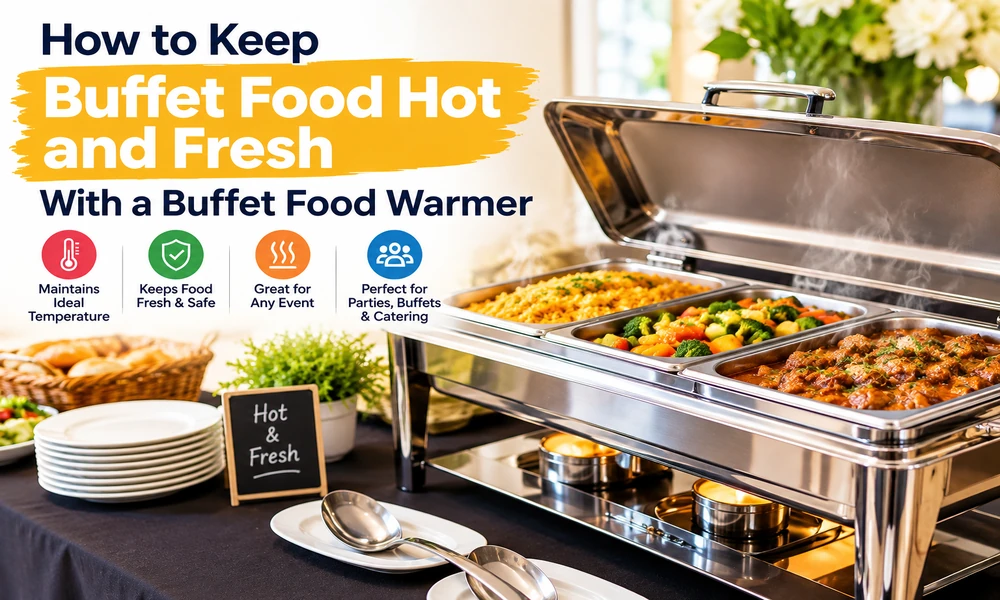
Serving a buffet sounds simple until the food has been sitting out for an hour. Crispy dishes can turn soft, sauces may thicken, and foods that should be served hot can quickly lose their appeal. For hosts and caterers, keeping food hot at a buffet is not only about making meals taste better. It also plays an important role in food safety and the overall guest experience.
A reliable buffet food warmer, proper serving equipment, and a little planning can make a noticeable difference. Whether you are preparing food for a birthday party, wedding reception, office lunch, family gathering, or professional catering event, the goal is the same: maintain safe temperatures without drying out or overcooking the food.
Here is how to do it effectively.
Why Keeping Buffet Food Hot Matters
Guests rarely arrive at a buffet table at exactly the same time. Some people may begin eating as soon as service opens, while others might not approach the food for another 30 or 45 minutes.
That makes food temperature holding an essential part of buffet planning.
Hot dishes need to stay hot enough to remain appetizing and within safe temperature ranges. When food is allowed to sit at unsuitable temperatures for extended periods, harmful bacteria can multiply.
Temperature also affects quality.
Imagine serving freshly cooked pasta with a smooth sauce. If the pan sits uncovered without controlled heat, the sauce may cool and become thick before half the guests have eaten. The same can happen with rice, vegetables, meat, casseroles, and soups.
A good holding system helps preserve:
- Serving temperature
- Moisture
- Texture
- Flavor
- Visual presentation
- Food safety
The goal is not to continue cooking the food. It is simply to maintain it at the right serving temperature.
Choose the Right Buffet Food Warmer
Not every dish requires the same type of warming equipment. The best option depends on what you are serving, how many people are attending, and how long the buffet will remain open.
Common warming methods include:
- Chafing dishes
- Electric warming trays
- Slow cookers
- Soup kettles
- Heated holding cabinets
- Insulated food containers
For larger gatherings, catering food warmers are especially useful because several trays can be arranged together while maintaining a clean, professional-looking buffet.
Chafing dishes remain one of the most familiar options because they work well for foods such as rice, pasta, vegetables, chicken, beef, breakfast dishes, and casseroles.
When planning a buffet, properly sized chafing dishes can help organize different menu items while keeping them warm throughout the service period.
The equipment you choose should match both the menu and the expected number of guests.
Master the Chafing Dish Setup Before Guests Arrive
One of the easiest ways to create unnecessary stress is waiting until guests arrive before preparing the warming station.
A proper chafing dish setup should be completed before the food comes out of the kitchen.
Most traditional chafing systems consist of:
- A frame or stand
- A water pan
- A food pan
- A lid
- A heat source
The water pan sits below the food pan. Heat warms the water, creating gentle, indirect heat around the food container.
This method helps prevent food from sitting directly over an intense flame.
Preheat the Water
Do not start with cold water if you can avoid it.
Adding hot water to the water pan allows the warming system to reach operating temperature faster. Starting with cold water means the heat source has to warm both the water and the food container, which takes longer.
Add Food While It Is Already Hot
A common buffet mistake is expecting the warmer to heat refrigerated or lukewarm food.
Most buffet warmers are designed primarily for holding food, not cooking or reheating it.
Food should usually be fully cooked and properly heated before being transferred to the buffet station.
Understand Food Temperature Holding
Maintaining temperature is one of the most important aspects of professional buffet service.
In general, hot foods should be kept around 140°F (60°C) or above during service, although local food-safety regulations may differ.
Use a food thermometer rather than relying on appearance.
A tray of chicken can still feel warm to the touch while parts of it have already dropped below an appropriate holding temperature.
Check temperatures periodically, especially during longer events.
A simple routine might include checking:
- When food enters the buffet
- After approximately 30 minutes
- After replacing or refilling trays
- During extended service periods
Consistent food temperature holding makes it easier to catch problems before they affect the entire buffet.
Avoid Overheating and Drying Out Food
More heat is not always better.
Keeping food extremely hot for several hours can damage texture and flavor. Rice may become dry around the edges. Pasta can become overly soft. Meat may lose moisture.
The best buffet food warmer setup creates steady, gentle heat rather than aggressive cooking temperatures.
You can also protect food quality by:
- Keeping lids closed whenever possible
- Using smaller batches
- Stirring suitable dishes occasionally
- Checking the water level beneath chafing pans
- Replacing food rather than repeatedly reheating old portions
For foods containing sauces, light stirring can prevent the surface from drying and help distribute heat evenly.
Use Smaller Batches Instead of One Huge Tray
One practical trick used in party buffet service is to avoid placing the entire quantity of food on the buffet at once.
Suppose you expect 80 guests and have prepared a large amount of chicken.
Instead of placing everything into one oversized tray, start with a smaller pan and keep additional portions properly hot in the kitchen or another holding area.
When the first tray becomes low, replace it.
This approach provides several advantages.
The food spends less time exposed to air, the serving area stays cleaner, and newly replaced dishes look more appealing than a pan that has been sitting on the buffet for two hours.
Smaller batches are especially helpful for foods that lose quality quickly.
Match the Warming Method to the Food
Different dishes respond differently to extended warming.
Rice and Pasta
These foods can dry out if left uncovered.
Use covered pans and moderate heat. Stirring occasionally can also help distribute moisture.
Meat and Poultry
Sliced meats may dry faster than larger pieces. Sauces, gravy, or a small amount of cooking liquid can help preserve moisture when appropriate.
Vegetables
Overheating vegetables can make them soft and dull in color. Try to prepare them closer to serving time and avoid holding them longer than necessary.
Soups and Sauces
Soup kettles, slow cookers, or specialized catering food warmers may work better than shallow buffet pans.
Fried Foods
Fried foods are among the hardest items to keep crisp.
Covering them tightly may trap steam and soften the coating. When possible, prepare smaller batches and replenish them more often.
Good buffet planning starts with recognizing that every dish has different holding requirements.
Keep Lids Closed Between Servings
One of the simplest rules for keeping food hot at a buffet is also one of the most effective: keep the lid closed.
Every time a lid remains open, heat and moisture escape.
Guests will naturally open and close serving dishes, but staff or hosts should make sure lids are not accidentally left open for long periods.
Lids also help protect food from airborne contaminants and unnecessary handling.
For self-service buffets, consider assigning someone to check the buffet periodically rather than leaving it unattended for the entire event.
Monitor Water Levels in Chafing Dishes
If you are using a water-based chafing dish setup, the water level matters.
Water can evaporate during long events. If the pan becomes dry, the food above may receive stronger, less even heat.
Check water levels carefully and refill with hot water when necessary.
Avoid overfilling the pan as well. Too much water can create spills when food pans are inserted or removed.
Ideally, the water should provide enough heat transfer without touching or overflowing around the food pan.
Organize the Buffet for Faster Service
The way you arrange your party buffet service can indirectly affect food temperature.
If guests take too long to move through the buffet, lids remain open longer and foods spend more time exposed.
Create a logical serving order.
For example:
- Plates
- Salads or starters
- Rice or pasta
- Main dishes
- Vegetables and side dishes
- Sauces and condiments
- Napkins and cutlery
For large events, consider creating two serving lines using identical foods. Guests move through more quickly, reducing congestion around the warming equipment.
Serving utensils should also match the dishes. Large spoons, tongs, and ladles help guests serve themselves efficiently.
Protect Food Quality During Long Events
Some catered events last several hours.
In these situations, simply leaving the same food on the buffet for the entire event is rarely the best approach.
Create a rotation schedule.
Fresh trays can be brought out while older trays are removed before they lose quality.
This is where professional catering food warmers and insulated holding equipment become particularly useful. Replacement food can remain safely hot away from the serving table until it is needed.
Labeling trays in the preparation area can also help staff know which batch should be used next.
Common Buffet Warming Mistakes to Avoid
Even a well-planned buffet can run into problems if small details are overlooked.
Common mistakes include:
- Putting cold food directly into warming equipment
- Using excessive heat
- Leaving lids open
- Allowing water pans to run dry
- Mixing fresh food into an older tray
- Holding food for too long
- Guessing temperatures instead of using a thermometer
- Overfilling serving pans
- Ignoring different warming needs for different dishes
Avoiding these problems makes keeping food hot at a buffet much easier.
FAQs About Keeping Buffet Food Hot
How long can food stay in a buffet warmer?
The answer depends on the dish, temperature, and applicable food-safety guidelines. Even when food remains at a safe temperature, quality can decline over time. Rotating smaller batches usually produces better results.
Should a buffet food warmer be used to reheat cold food?
Generally, no. A buffet food warmer is mainly intended to maintain the temperature of food that has already been properly cooked and heated.
How much water should go into a chafing dish?
The exact amount depends on the equipment. Use enough water to create steady indirect heat without overfilling the pan. Always follow the manufacturer’s instructions for your specific setup.
How do caterers keep food hot without drying it out?
Professional caterers combine controlled heat, covered containers, moisture management, temperature checks, and smaller batch rotation. Matching the warming method to the specific food is also important.
What foods work well in a chafing dish setup?
Rice, pasta dishes, cooked vegetables, casseroles, breakfast foods, chicken, beef, and many sauced dishes generally work well when the temperature and moisture levels are managed correctly.
Conclusion
Successful buffet service comes down to more than cooking enough food. The meal also needs to stay safe, warm, fresh, and enjoyable from the first guest to the last.
Using the right buffet food warmer, preparing the warming station before service, monitoring temperatures, keeping lids closed, and replacing food in smaller batches can solve many common buffet problems. A well-planned party buffet service also makes it easier for guests to move through the line without leaving dishes exposed for too long.
Most importantly, treat warming equipment as a holding system rather than a cooking shortcut. When proper food temperature holding is combined with thoughtful timing and organization, even a large buffet can serve food that tastes much closer to the moment it left the kitchen.
