

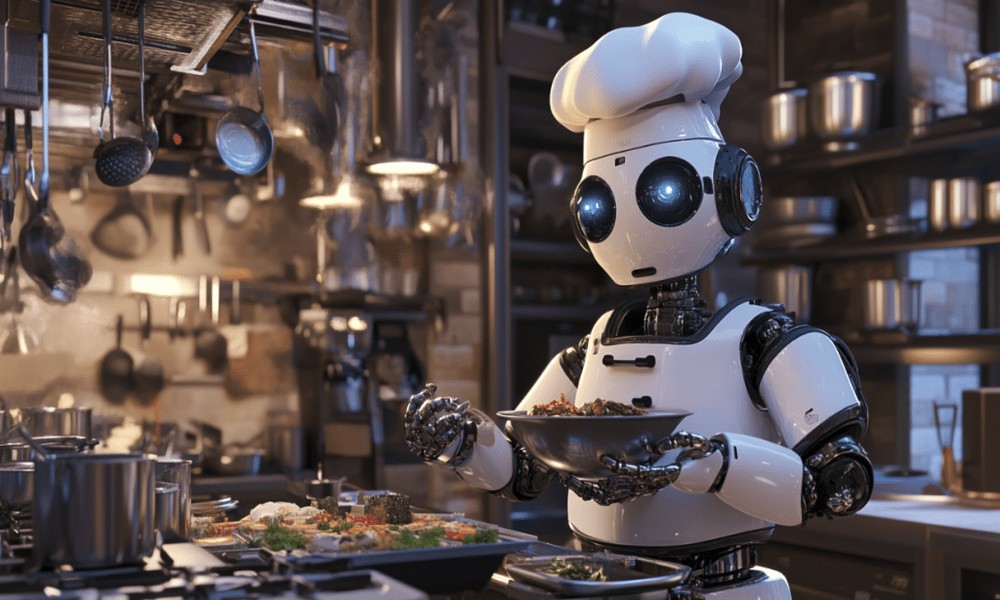
What Happens When a Machine Starts Cooking Better Than Humans?
Imagine opening your phone and asking for dinner ideas. Instead of browsing endless websites, watching complicated cooking videos, or scrolling through recipe blogs that all seem to repeat the same meals, an intelligent system instantly creates a personalized dish based on your taste preferences, health goals, allergies, ingredients available at home, cooking skill level, and even the amount of time you have before dinner.
Not tomorrow.
Not someday in the future.
Right now.
Artificial intelligence is rapidly changing the food world, and one of the most fascinating developments is the rise of AI-generated cooking systems-often described as “AI chefs.” These systems can generate original meal ideas, customize recipes in seconds, recommend ingredient substitutions, optimize nutrition, and even learn individual eating behaviors over time.
Naturally, this raises a big and slightly uncomfortable question:
Are human recipe creators becoming obsolete?
For people trying to maintain a consistent Healthy diet, this shift feels both exciting and unsettling. On one hand, AI makes personalized nutrition easier than ever. On the other hand, food has always been deeply human-connected to culture, emotion, storytelling, memory, and creativity. Can a machine really replace the intuition and artistry of someone who has spent years perfecting recipes?
The answer is more complicated than many people expect.
For decades, recipe creation followed a predictable process. Human chefs experimented in kitchens, tested flavors, adjusted ingredients, balanced textures, and relied heavily on instinct, experience, and personal taste. Recipe bloggers and food creators spent hours planning meals, testing combinations, photographing dishes, and writing instructions. Success depended on culinary skill, creativity, and audience understanding.
Artificial intelligence changes this equation dramatically.
Modern AI tools can now analyze millions of ingredient combinations, nutritional databases, flavor pairings, cooking methods, and consumer preferences almost instantly. Instead of taking days to test possibilities, AI systems generate hundreds of variations within seconds. Want a lower-calorie pasta dish? A high-protein breakfast? Dairy-free desserts? Gluten-sensitive dinners? Heart-friendly comfort foods? Personalized Healthy recipes appear almost immediately.
This speed alone makes AI feel revolutionary.
Imagine typing:
“Create a high-protein Mediterranean dinner with ingredients already in my kitchen.”
Or:
“Generate Quick recipes under 20 minutes for a family trying to eat healthier.”
Within moments, AI produces meals tailored to goals and preferences.
For people overwhelmed by meal planning, maintaining a Healthy diet suddenly becomes far more realistic because decisions feel simpler.
The real power of AI chefs lies in personalization. Traditional recipe creators generally publish one version of a recipe and hope it works for many people. AI chefs create individualized versions for everyone.
One person receives a low-carb version.
Another gets higher fiber.
Another receives allergy-safe modifications.
Someone focused on muscle growth receives more protein.
Someone prioritizing heart health receives sodium-conscious alternatives.
Even individuals using herbal supplements or food supplements as part of a wellness routine may receive meal ideas designed to complement nutritional goals rather than compete with them. For example, meals rich in anti-inflammatory ingredients may pair with wellness routines focused on digestion, immunity, recovery, or overall vitality. Instead of replacing balanced eating, herbal supplements become part of a larger strategy centered around a sustainable Healthy diet.
This level of personalization is difficult for traditional recipe creators to match at scale.
Yet personalization alone does not settle the debate.
Because food is not simply functional.
Food is emotional.
Think about family recipes passed through generations, cultural meals connected to childhood memories, comfort foods during difficult moments, holiday traditions, and meals created through intuition rather than algorithms. Human chefs bring lived experience, cultural understanding, and storytelling into recipes. A grandmother’s soup recipe is meaningful not because of optimized nutrient ratios, but because of emotional memory.
Artificial intelligence struggles with this human layer.
An AI chef can suggest ingredients, calculate nutritional density, and recommend cooking techniques, but it cannot experience nostalgia. It cannot truly understand why a specific meal matters emotionally to a family or culture. It cannot replicate memory-driven creativity in the same way humans do.
This becomes especially clear in restaurant innovation and culinary artistry. Human chefs experiment with texture, presentation, surprise, storytelling, and sensory experience in ways that go beyond pure optimization. A human creator often invents meals from intuition, emotion, or personal inspiration-something AI imitates rather than genuinely experiences.
At the same time, ignoring the power of AI would be unrealistic.
Many professional chefs are already beginning to use AI tools to enhance creativity rather than replace it. Instead of brainstorming manually for hours, they can test ingredient combinations instantly, explore flavor variations, improve efficiency, and generate fresh ideas. Recipe bloggers can create more personalized meal suggestions. Nutrition professionals can recommend better Healthy recipes faster. Restaurants can optimize menus around customer behavior.
In this sense, AI chefs may not replace human creativity-they may amplify it.
The rise of AI-generated cooking also dramatically changes accessibility. Many people struggle with cooking because meal planning feels confusing or intimidating. AI removes friction. A beginner cook can request:
“Give me Quick recipes with chicken and vegetables.”
“Create easy Healthy recipes for weight loss.”
“What meals can I cook in 15 minutes?”
The result is immediate, practical guidance that feels approachable instead of overwhelming.
The role of the ai chatbot becomes especially important here. Rather than searching multiple websites, users can interact conversationally:
“What can I cook using leftover rice?”
“Suggest a healthier version of comfort food.”
“Help me plan a week of meals for a Healthy diet.”
The chatbot instantly adapts recommendations based on goals, dietary restrictions, available ingredients, and preferences.
This convenience is reshaping expectations around food planning.
Interestingly, the rise of AI chefs also changes the economics of food content creation. Traditional recipe creators once competed mainly through originality and cooking skill. Now, differentiation increasingly depends on personality, trust, storytelling, niche expertise, and human authenticity. Readers may still turn to human creators for emotional connection, culinary philosophy, cultural perspective, and inspiration-even while relying on AI for personalization and convenience.
The future may look less like replacement and more like collaboration.
Imagine human recipe creators designing frameworks while AI personalizes them instantly. A chef develops a signature meal, while AI adjusts ingredients, calories, portions, allergies, and nutrient balance for each individual user. This hybrid model combines human creativity with technological adaptability.
Recent developments in AI news suggest this transformation is accelerating quickly. Food technology companies are building intelligent kitchen assistants, automated meal recommendation systems, nutrition-aware cooking tools, and predictive recipe engines capable of learning personal eating behavior over time. Smart kitchens may eventually recommend meals before users even ask.
At the center of all of this remains one key goal: helping people eat better.
Whether through personalized Healthy recipes, simplified Quick recipes, support from an ai chatbot, smarter nutrition powered by AI tools, or meal strategies designed around wellness goals that include food supplements and herbal supplements, AI is making healthy eating more accessible and adaptive than ever before.
So, are human recipe creators becoming obsolete?
Not exactly.
Artificial intelligence may replace repetitive tasks, automate personalization, and dramatically accelerate recipe generation. But human creators still bring emotion, culture, intuition, memory, and storytelling into food-qualities machines cannot truly replicate.
The future of cooking may not belong exclusively to humans or machines.
It may belong to both, working together to create meals that are smarter, healthier, and more personal than ever before.
