

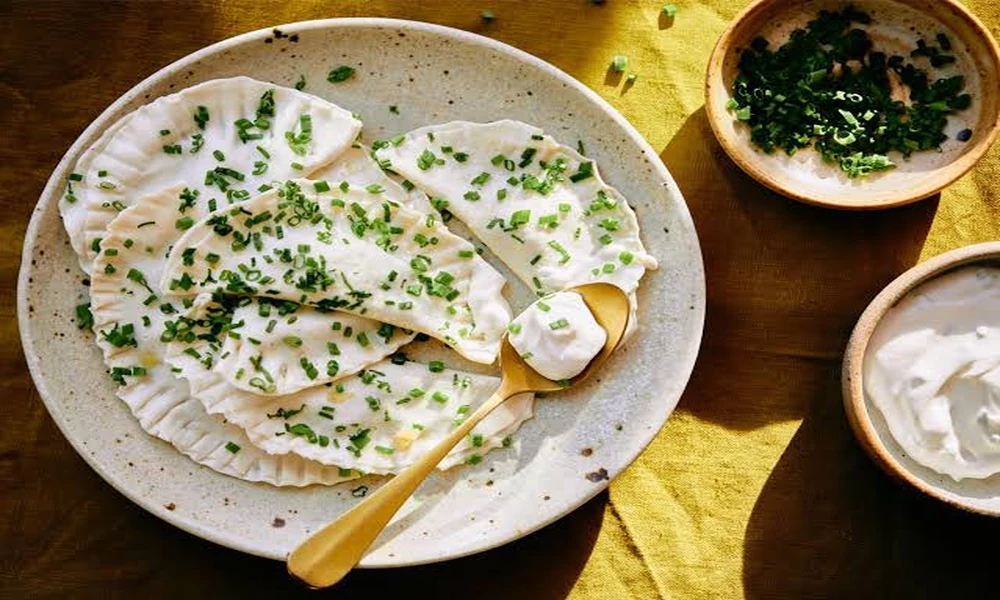
Onion inside a pierogi and onion spooned over it do different jobs. The filling makes onion part of each dumpling; a garnish changes the food around it and can be offered separately. Start with the product description, then decide whether an onion topping would reinforce a flavor you enjoy or simply repeat what dinner already contains.
Start with the flavor already enclosed
Sizzlin’ Fried Onion is a full-size, plant-based pierogi with potato and onion in the filling. The name describes an ingredient inside the dumpling, not a bag of plain potato pierogies accompanied by an onion garnish. That distinction is useful when you plan dinner because the main flavor does not depend on preparing a separate topping.
For someone browsing the Holy Perogy range for Charlotte, the potato-and-onion description gives a more practical starting point than a general promise of a savory meal. You can decide whether that combination suits the plate before considering extras. If onion is the flavor you were hoping to add, it is already part of the purchase.
A filling also limits how much the diner can adjust. Someone who wants onion only occasionally can leave an optional garnish untouched, but they cannot remove it from the center of the dumpling. Ask about that preference before choosing the meal for another person. Describing the food accurately is kinder than assuming that an enclosed ingredient will go unnoticed.
Do not infer the complete flavor profile from a familiar onion dish you make at home. The product description tells you that potato and onion are in the filling; it does not establish that the product will taste exactly like your own topping. Leave room for personal observation. The first dinner can reveal whether you enjoy the filling as it is or prefer something alongside it.
Plan the preparation from the current package. These pierogies are sold frozen and uncooked, and the product name is not a cooking instruction. A word such as “fried” in a variety name does not give you permission to choose an appliance or method without checking the directions. Keep the distinction between flavor identity and preparation clear.
Decide whether a topping should echo or contrast
An onion topping can be intentional even when onion is already inside. If you especially enjoy that flavor, repeating it may be the point of the meal. Think about whether you want the topping in every bite or only beside some dumplings. Serving it separately lets the diner choose how strongly to emphasize it without committing the entire dish.
Contrast offers another direction. A familiar tart vegetable side or a simple green accompaniment can let the filling remain the main onion element. The dinner then has two distinct ideas instead of several versions of the same one. These are taste suggestions, so choose the side according to what you enjoy and what is already available rather than treating a pairing as a rule.
Consider the other ingredients in your usual onion preparation. If it also includes a rich sauce, cheese or bacon, the decision is no longer only about onion. Each addition changes the meal and may change its suitability for the people eating. A plant-based filling does not make the finished plate plant-based if you add animal-derived ingredients around it.
It can help to sketch the plate verbally: potato-and-onion dumplings, a green vegetable and a small optional finish. Then compare that with the more elaborate version you had in mind. Which element would you miss if it disappeared? Keep the additions that answer a real preference and set aside those that entered the plan merely because they often appear together.
A quieter side deserves care rather than indifference. Choose a vegetable you like, prepare it in a familiar way and season it to your taste. “Simple” should not mean an afterthought placed on the plate to fill space. The side works best when it offers an enjoyable pause between bites of the more pronounced filling.
If several people are eating, make the topping optional without creating a condiment buffet. One separate bowl is often enough to give an onion enthusiast a different plate from someone who prefers the dumplings as prepared. Additional choices should solve an actual preference difference, not turn a straightforward meal into a collection of unfinished possibilities.
Keep the onion description precise
When telling someone what dinner is, name the filling and the topping separately. “Potato-and-onion pierogies with an optional onion garnish” communicates the repetition clearly. “Pierogies with onions” could mean that the dumplings themselves contain something else. This matters to guests who dislike onion as much as it does to anyone seeking a particular flavor.
The same precision helps when someone else shops. Give the exact product name and say that you want onion in the filling. If a different variety would be acceptable with an onion topping, make that substitution explicit. Otherwise a shopper might preserve the word “onion” while changing the part of the meal where it appears.
Keep the package available if a guest asks about ingredients beyond the headline description. A brief filling summary is useful for conversation, but it is not a complete label. Do not turn the plant-based description into a guarantee about allergies or other personal requirements. Let the guest review the relevant information before deciding what to eat.
After the meal, notice where the onion flavor worked best for you. Perhaps the filling supplied everything you wanted, or perhaps the separate garnish was worth keeping. That observation can simplify the next grocery list. You will know whether the extra onion preparation has a purpose instead of repeating it automatically.
Give the onion emphasis a clear home. If the filling carries it comfortably, let the rest of the plate offer something different; if you enjoy an echo on top, make that a deliberate choice you can taste.
